Showing posts with label Birding. Show all posts

Monday, November 14, 2016

Blog Post #5: Birding by the Beach

     Going to the Meadowdale Beach trail was probably my favorite field trip so far. Mostly because the park itself is already really important to me personally and I kind of consider it a second home, but also because it felt like the first time we could examine more mammals and non-insects outside of our texts.


     Definitely the most interesting thing I learned about birds on the field trip, and honestly just an interesting activity in itself was how many different species one can identify from call/song alone. Something about being able to study and thoroughly understand more about an entire location's bird population without ever seeing one was fascinating to me.


     One thing I learned and that stuck with me was truly how many species can occupy even a single tree, let alone an entire ecosystem. It really speaks to how important and impacting they are to an entire ecosystem, because different species have to exist in so many different niches alongside each other.


     The Golden Crown Kinglet was one interesting species to me. I was not able to photograph it sadly, but some of its key characteristics are that they tend to dwell and forage in shrubs, they are usually one of the smallest fully grown species in the PNW, and they have a bright yellow crown atop its head as well as a grey/yellow body. 

Bird watching!

The bird watching hike last week has been my favorite field trip thus far.  I liked the hiking,  and the view from the water was amazing.  I also enjoyed seeing so many different types of landscape,  like the clusters of Red Alder and Spruce.
     The most interesting thing that I leaned was that crows use a unique,  and somewhat unexplainable communication system that allows them to actually describe a person's appearance and the behavioral characteristics of the person. While on the trip, we learned about the Pacific Wren. The Pacific Wren can be identified by a very short tail.  The bird is very small,  and occupies the understory  of the forest and its floor. They are brown, with darker stripes of color on the tail, wings, and brow. The Pacific Wren is very vocal and has both calls and songs in its repertoire. Dominant male Wrens can be very aggressive, especially during mating season.
         Birds are an important part of the ecosystem because they aide gymnosperms and angiosperms in the dispersion of seeds. Without birds, "mother" trees would be competing for resources with their "children".


The Pacific Wren and Crow

Image result for group of crows called?There are a few things that I found to be fascinating.

At the beginning if the field trip we started talking about the Crows and how they can remember faces, but not only can they remember faces, they can communicate to other Crows of which faces are a threat and which are a benefit. So basically if one Crow were to see you, they all can recognize you if the that particular Crow were to "report" you to their group called a Murder.


The second time we stopped we talked about how some birds flock together to scavenge for food. During that time of them takes lead and looks out for predators or areas where food is abundant. We mostly saw Pacific Wren. The flock of Wren's will forage from mostly lower surfaces, but keep a distance from each other so if there is a predator near by the whole flock will not be attacked. When foraging they call out to each other to make sure they are still some what close as well as communicating where the young are. One of their biggest identifiers is by their calls. It's usually a long high rapid tweeting sound and they usually hop around the lower forest floors.


meadowdale birding

The most interesting thing I learned about birds was hands down the anatomy of a woodpecker tongue.  I had no clue and would have never had guessed that they have separate sockets that curve around their skull to contain their extremely long tongue.

Birds are important for keeping insect populations in check, without them things might get out of hand.  Another very important function is seed dispersal and general nutrient cycling.  When berries are eaten seeds are usually included, and are deposited with a coating of bird droppings which gives the future plant a head start with a rich layer of compost.  Some seeds actually require digestion for germination, and would not germinate without this.

The Pacific Wren is an impressive bird, specifically because of the amount of sound comes out of such a small organism.  The small bird is not much larger than a golf ball, and has brown feathers and a dark brown beak.  Likes to hang out in the undergrowth, weaving through twigs and branches, landing for a moment and looking about before moving on as if combing through the undergrowth for food.


Sunday, November 13, 2016

Lunds Gulch

Holes made by woodpecker in tree at meadowdale beach park.
Holes made by woodpecker
While on our field trip into Lunds Gulch at Meadowdale beach park, we learned about the importance of birds. Birds are a key element in nearly all ecosystems because of their importance in plant reproduction. Birds do this by filling the roles of pollinator and seed distributer. As with other animal families, birds help maintain population levels of their pray and distribute nutrients through the environment. Birds can also be keystone species. For example, woodpeckers create cavities that are later used by other species as nests.

I was interested to learn that crows can communicate some complex ideas to each other. Studies showed that crows in one area could recognize a human that had agitated crows in another area, causing them to swarm the agitator. Somehow, the crows were able to spread the word about the human looked like, to other populations. 
A Pacific Wren.

One species that we recognized was the Pacific Wren. This small, mouse-sized bird is solid brown with black barring on its wings, tail, and undersides. The bill is dark brown, the legs pale brown, and It has a short tail that it holds upright. Pacific Wren songs and calls are an elaborate series of high-pitched, varied, and rapid musical trills and chatters.


Bird Field Trip

I really enjoyed learning about birds and their various calls, I felt it was the most interesting part of the field trip and it's something I would love to learn more about. My family has always been pretty wildlife friendly and as a result we get a lot of different birds that come to our yard, I would like to get to a point where I can identify them by their different calls.

Birds are an important part of the ecosystem because they are carriers. Birds eat various fruits and seeds, and then carry those seeds and disperse them around their territory. Birds are also a prey species, and are an important food source to a variety of predators. Some birds, like woodpeckers, are considered keystone species. Woodpeckers create cavities in trees that are used by many other species.

An interesting species of bird that we encountered on the field trip was the Chestnut-backed Chickadee. They are a small species with a short beak, long, narrow tails, and short wings. They have black and white heads like other chickadees, and have a chestnut colored back (unlike other species of chickadees, which often have gray backs).


Wednesday, November 9, 2016

Post #5, Tuppence a bag

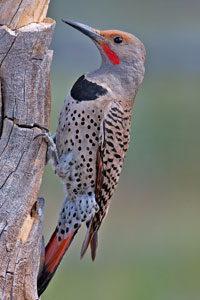
Nature Mapping Foundation - Northern Flicker
The importance of birds in the ecosystem can't be understated. They play several big roles; first of which being population control for bugs and rodents. Namely, the woodpecker, drills out bugs from the inside of a dying or dead tree's bark. There is a variety that has adapted to starting from the top of the tree -working its way down. Their beaks are actually curved upward to compensate for this reversal in direction. Another big role they play is seed dispersal; they consume a large variety of berries and nuts and this helps to increase a plant species territory. They also serve as great pollinators and recyclers.


I think the most interesting thing I learned about birds specifically was how long a woodpecker's tongue is (and that it even had/used a tongue for catching bugs), and that when the tongue retracts it splits into opposite sides of the woodpecker's cranial cavity.


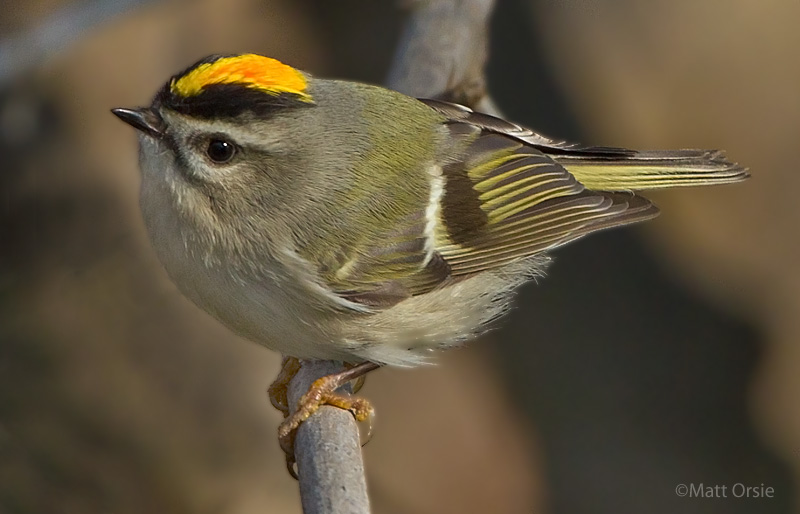
Matt Orsie - Golden-crowned Kinglet

One bird that was a real treat to see and learn about was the Golden-crowned Kinglet. These are very easy to identify by sight as they have a chickadee-like body with a distinct yellow-orange patch along the top of their head. They stay in groups for survival and stick mostly to dense trees that hide their position. They are songbirds though so they can also be identified rather quickly by sound when you know what to listen for.


Special thanks to Dave!