Showing posts with label SpeciesOfConcern. Show all posts

Friday, October 7, 2016

Canadian lynx


Lynx canadensis (Canada Lynx)

Though it’s names suggests otherwise, the Canada Lynx’s historic range extended into the northern contiguous united states and stretched from coast to coast, reaching as far south as the Colorado Rockies. The Lynx is found in northern subalpine and boreal forests mainly in Canada and Alaska. Western Okanogan County is the only area in the state that supports a resident lynx population with an estimated population with less than 100 individuals. The Lynx is listed as Threatened in Washington state and under the federal Endangered Species ACT.

The Lynx is a specialized hunter praying almost exclusively on Snowshoe hare. It tends to be nocturnal and can cover 5 miles every day to get prey. Lynx populations are directly tied to population cycles of snowshoe hare.


Photo by Michael Zahra

They have evolved to features that provide advantages in deep snow habitats. With large saucer like paws, long legs, and dense long furry coat, the Lynx is uniquely suited to hunting on top of a large snow pack which gives it an edge against its competitors.

1.6 inches long tuffs of black hair grow from the tips of their ears. In winter the hair on their lower cheeks grows long and appears to form a ruffle covering the throat. The coat is short and reddish brown to greyish in summer, but becomes longer and greyer in winter. Their short tails are marked with dark rings and terminate in a fully black tip. Canada lynx have been reported to live up to fourteen years in captivity although the lifespan is probably much shorter in the wild.


Photo by Michael Zahra

The Canada lynx is trapped for its fur, and has declined in many areas due to habitat loss. a variety of factors contribute to its habitat reduction, particularly land use changes with human expansion, forest fires, over exploitation, and a warming climate. The lynx is particularly vulnerable to climate change as the deep snow cover that lynx depend on may be significantly reduced, removing their competitive advantage.

In 1999 the Colorado Division of Wildlife began a program reintroducing a wild lynx population into the San Juan Mountains of Colorado where it had been extinct since 1970. As of 2010 the population had expanded, confirming the possibility of successful reintroduction. Unfortunately, there is no sign that Washington's Canada Lynx population has improved since it was listed for protection.

I honestly chose the Canada Lynx because of it's unique look. I don't see the species receiving a lot of attention in the media, possibly because of it's size. I knew nothing about it to begin with and despite it's small stature, I still find it to be pretty freaking majestic.


Works Cited
http://wdfw.wa.gov/publications/00394/
http://cpw.state.co.us/learn/Pages/SOC-LynxResearch.aspx
https://www.fws.gov/northeast/climatechange/stories/lynx.html
https://en.wikipedia.org/wiki/Canada_lynx


Black Footed Ferret

Species: Black Footed Ferret
Status: endagered
Distribution: Wyoming/ Northern parts of North America
The Black Footed Ferret (Bff) is a mammal who is a nocturnal carnavour and generally feasts on ground squirrels, mice,  insects, birds, and Prairie dogs. This animal has stout legs and is never more than 2 feet on length from nose to the tip of the tail. Also their facial features resemble that of a n adorable racoon. They live in grasslands, especially the Northern Great Plains. The reason for this favoritism is because the grass is crisp and short, but also of vast variety of grasses.   This species was believed to be extinct not to long ago. However, in 1987,  the BFF were taken into captivity for breeding.  They were then reintroduced into the wild with a very successful outcome. There is now an estimated 300 BFF living in the wild.  Black Footed Ferrets live in the Northern most part of North America and are the fruition of relocation programs. The main causes of the declination of the BFF are as follows: the BFF rely on Prairie dogs as a food source,  but also because the BFF use the tunnels dug by the prairies to make their homes.  In recent years,  farmers have deemed prairie dogs  to be pests, and as such they have started a campaign to rid their land of the Prairie dogs. They use pesticides by means in which to kill the Prairie dogs, thus killing the BFF. Also, domestic dogs and coyotes have brought additional diseases into their population.  I haven't found a link to climate change and the endangerment of BFF, however vulnerability is a key issue.  For instance,  the BFF have had to congregate into smaller habitats. Because of this,  isolation has occurred. Within this isolation,  reproduction has decreased,  and worse,  inbreeding has increased the vulnerability of the species. Once inbred, diseases run rampant through the population because of lowered immune systems. Other simular animals such as coyotes have introduced disease into their population. The bright side of this situation is that the Wyoming department of fish and Game is currently at the forefront of research for this species,  a part of that includes reintroduction into the wild. This is the perfect example of one species depending on another. Native American environmentalists, state and Federal organizations have given funding and research money to this cause. I picked this species because they are adorable, and my day-care provider as a child had Ferrets. 💚
I got my info from the WWF website for endagered species and from Bagheera, a site dedicated to giving out information about species who are threatened.

Killer Whale (Orca)

ORCA WHALE
Orcinus orca

While looking through the many species that are included in the Washington state species of concern, I felt overwhelmingly saddened by the sheer amount of species and, likewise, the human contributions to their places on the list. As soon as I saw the Orca, or Killer, whale (scientific name of Orcinus orca) on the list I knew that this would be the animal I wanted to further research. Growing up in Florida, it was always a dream of mine to visit somewhere in the Pacific Northwest so I could see one of these awe-inspiring and intelligent animals. Orca whales are classified as an endangered species, shockingly to me, the population numbers only 84 whales as of March 2016! While I have known for a while that their population was suffering and dwindling, I had no idea just how few were left living. While Orca whales can inhabit any ocean in the world, they are most typically found in colder coastal waters surrounding the Pacific Northwest and northern Norway.
Orca whales are intelligent mammals (fun fact: their brain weighs about 15 pounds!) that form extremely strong social bonds among their pod. Orca pods typically consist of multiple matrilines, which are a group of whales that are connected via a maternal bond, which is not surprising as females are the dominant gender among them. Mothers and calf's have very strong relationships and many spend much of their lives together. Thanks to one of the longest cetacean field studies ever, conducted right here in the Pacific Northwest, it is known that females live an average of 29 years and males live around 17 years. 
Orca whales face many threats to their population, all of which have contributed to their population decline. It is well known that over-fishing and pollution have had a terrible effect on marine life and the depletion of fish populations; salmon in the Pacific Northwest are just one example of this travesty in practice. This is a serious concern for Orca whales as many fish species are a source of food for the whales. With less food to consume, Orcas have become far weaker and, thus, more susceptible to suffering from diseases and pollution infesting ocean water. The majority of the pollutants that are having such a devastating effect on the ocean waters are caused by humans. Another way we are threatening the Orca whale's existence? Noise pollution! Orca whales highly reliant on their fantastic hearing ability and vocalizations in order to communicate with their fellow whales and to navigate their territory. With the increasing number of boats roaming the same waters the Orcas call home, it only makes sense that the boat engines and vessel sounds are disrupting normal life for the whales and effecting their well being. Finally, in what has, sadly, become a common theme for many of the world's species, climate change, particularly water temperature and water levels, is also adding to the many threats Orca whales are struggling with.
It is not surprising that with Orca's numbers dwindling some have come together to try to form conversation efforts to help save the remaining whales and encourage breeding and, thus, an increasing population. For example, while people love whale watching and getting a chance to glimpse this majestic animal in it's natural habitat, it is now known that boats coming so near to them impedes their normal life and measures have been taken to keep a safer distance. Many are involved with efforts to keep water pollution to a minimum, reducing contaminants in the water and, therefore, increasing fish populations. As fish provide a big source of nutrition for Orca whales, this will be helpful to their overall health. It is also important that the laws preventing Orca whales from being hunted are strictly enforced and maintained. It will be an uphill battle to save this species but it is worth the challenge and if everyone makes even a little contribution a lot of good can be done.   

Grizzly Bear

Ursus arctos horribilis

The Grizzly Bear

photo by Daniel Dietrich


       One of the most fearsome animals to be found in the wild, the grizzly bear now remains an endangered species. Only around 1,500 remain -stretching from Yellowstone, up through Idaho/Western Montana, the Cascades, and into Canada.

They normally live to be about 25 years old, weighing anywhere from 250-600lbs. Typically, they will eat just about anything they come across and are therefore opportunistic omnivores. And they need to be, too. Grizzlies are up against a list of factors that limit their chance at recovery. The first being the over-hunting of the species during Western colonization leading up to the turn of the 20th century. The second biggest problem they face is now there are a multitude of highways and settled valleys that have fragmented their population. This has led to a lack of genetic diversity and even genetic isolation since female immigration between populations has dropped significantly -making the future of their existence very uncertain. 

      
Matthias Breiter—Minden Pictures/Getty Images

Conservation efforts have been the upgrading the status of the species from threatened to endangered. Operations like Western Wildlife Outreach work to spread a respect for the species throughout communities that are in contact or conflict with grizzlies that have resulted in high mortality.


I chose to highlight this animal because although I fear ever running into one, I respect the important role they play in the ecosystem. They also are fascinatingly big and powerful which adds somewhat of a thrill to learning about them, which I was sad to learn that there remain so few of them left.


Works Cited
WDFW. "Endangered Species: Grizzly Bear." Annual Report. Washington Department of Fish and Wildlife, 2012. PDF. 07 Oct. 2016.

Leatherback Sea Turtle

Photo by Jürgen Freund / WWF

The Leatherback Sea Turtle is a state and federally recognized endangered species, with a nesting female population of perhaps only 7752 as of 2010 (Wallace). They can be found in both tropical and temperate waters around the world.

Leatherback Sea Turtle's are long lived, beginning their life when they hatch from their eggs and crawl to the ocean. If they make it to adulthood, they can weigh between 500 and 200 pounds and be 4 to 8 feet in length. Their name is very fitting, because they are the only turtle lacking a hard shell. They instead have a lattice of bones covered by leathery skin. They gain the majority of their calories from jellyfish (Washington Department of Fish and Wildlife).

This species is especially vulnerable to humans encroaching on their nesting habitat and stealing their eggs. In the ocean, pollution from plastic mistaken as jellyfish and eaten can kill a turtle, and fishing nets can accidentally capture turtles, killing them. Climate change is also a threat to egg hatching and the young's survival rates (Washington Department of Fish and Wildlife).

To help protect Leatherback populations, the fishing industry has instituted devices that exclude turtles from their catch, and waters off of Washington have been designated as turtle habitat (Washington Department of Fish and Wildlife).

I chose the Leatherback Sea Turtle because I was surprised that they actually have populations in Washington. I have seen nature documentaries of the adorable baby turtles crawling to the ocean only to have 90% of them die before adulthood, but I never imagined that that happened here. To me they seemed too tropical of a species to nest here.


Washington Department of Fish and Wildlife. "Leatherback Sea Turtle." wa.gov. Washington Department of Fish and Wildlife, n.d. Web. 7 Oct. 2016.

 Wallace, B.P., Tiwari, M. & Girondot, M. 2013. Dermochelys coriacea. The IUCN Red List of Threatened Species 2013: e.T6494A43526147. http://dx.doi.org/10.2305/IUCN.UK.2013-2.RLTS.T6494A43526147.en. Downloaded on 07 October 2016.

Northern Spotted Owl


Northern Spotted Owl
Strix occidentalis ssp. caurina

State Status: Endangered since 1988 - Population size unknown

Distribution: Data collect from 1976-2011 shows there there were 1,070 known sites in Washington where they were present. Mostly in the Cascades and Olympics but have rarely been seen in the Puget Sound region.Almost exclusively associated with forests, the Northern Spotted Owl (Strix occidentalis ssp. caurina) is one of three known subspecies of spotted owl and the only one found to live in the Pacific Northwest, primarily in conifer forests. They have been found at sea level and up to 3,000 feet on the Olympic Peninsula and up to 5,000 feet in Cascades. Ranging from southwest British Columbia to northern California.


                                              Potential Range of the Northern Spotted Owl

Natural History: Known as "birds of the forest," spotted owls in western Washington occupy mature, old growth forests dominated by Douglas-fir, western hemlock, grand fir, western red cedar and other species of conifers that contain snags and fallen trees. Being birds of prey, their diet consists most of small mammals. They nest and roost in the canopy but never make their own nests, instead they use hollowed out crevices in snags or utilize an abandon nest from other raptors or sometimes squirrel nests. They usually lay two eggs after mating, not always mating every year. The female looks after the young while the male brings food back to the nest. They have been known to live for 17 years.

Threats: Habitat loss and competition with Barred Owls are the main threats this species is facing. Timber harvest and urbanization are the leading factors contributing habitat loss. The eruption of Mt. St. Helens is thought to have caused a large area of habitat loss.

Climate Change: Research shows that climate change has not directly threatened spotted owls but could threaten trees and forests they occupy in the future.

This species is vulnerable because their populations are in decline from the loss of habitat and the competition with Barred Owls. Actions are being made to protect and conserve spotted owl habitat and research is being made on the experiment of removing Barred Owls.

I chose this species because I really love owls, and have had few owl encounters in my life. Seeing a Great Horned Owl in the Cascades was quite amazing and quite a few Barred Owls in Seattle, one I saw that was just in the University District off of 50th. What surprised me learning about spotted owls was that they don't build there own nests, thought that was pretty interesting.

Sources: https://en.wikipedia.org/wiki/Spotted_owl
               http://wdfw.wa.gov/publications/01752/wdfw01752.pdf
               http://wdfw.wa.gov/conservation/endangered/species/northern_spotted_owl.pdf

Oregon Spotted Frog


Don't be fooled by its name, the Oregon Spotted Frog, or Rana pretiosa, are seen not only in Oregon but also in parts of Western Washington. This little guy is unfortunately extinct in most of Washington. As for the entire species as a whole, it's considered "Vulnerable." 

The Oregon Spotted Frog lives in lakes and wet areas that have floating vegetation, which is where you'd expect any frog to live. They also prefer a thin layer of warm water, which is seen in most of these habitats with floating vegetation.These frogs will mate in late winter, with a breeding period only lasting about 4 weeks.  The eggs will hatch a few months later, living as tadpoles for about 30 days, and taking about 95 days to metamorphisize. This species lives only for about 2-5 years.

So, what caused this species to go extinct in some areas, and become vulnerable in most areas of Western Washington?


Here's where the population of the Oregon Spotted Frog is. The three main causes of the species' vulnerability are: agricultural use of water, Dam construction, and introduction of the bullfrog in that area. These all factor in to the Frog's breeding, mostly having to do with the lack of acceptable breeding. This species require a warm area of water in order to reproduce. This could also be the result of climate change in that warmer and dryer areas could be the result of this. The NW zoo and aquarium alliance are currently working on saving this species, with multiple zoos and aquariums helping out.

I originally researched this species because I think frogs are really cool and wanted to learn more about them. I knew almost nothing about the Oregon Spotted Frog before this project, but now I know how unique this species is, and how vulnerable it currently is

Sources:


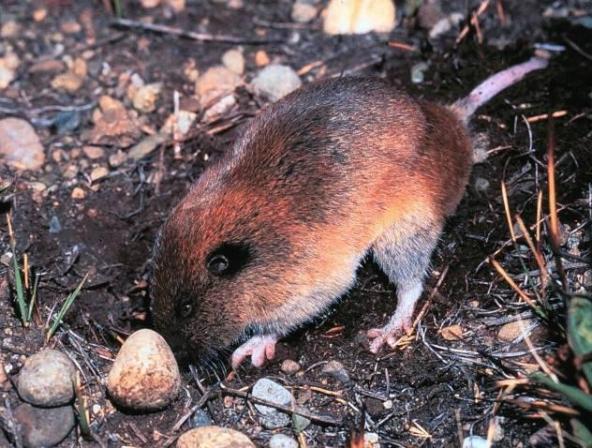
Mazama Pocket Gopher (Thomomys mazama)

Figure 1. Mazama pocket gopher. Photo by Bill Leonard.
(Mazama pocket gopher by Bill Leonard)

The Mazama Pocket Gopher (Thomomys Mazama), is one of the smallest species of pocket gopher alive. They live anywhere north of the Cascade Mountain range. Generally, they spend most of their time underground in burrows. Once they create a home they stay there without to much moving around, however, during rainy seasons they sometime shift their house's location around as to avoid any significantly damp soil.

Mazama Pocket Gophers are quite important to the balance of ecosystems. They can be quite helpful, their food stashes and excrement can be very beneficial to the soil and plants that reside above their burrows. Mazama Pocket Gophers eat fungi, grasses, flowers, and the roots of plants. They sometimes store these organic materials within their burrows, and occasionally they will rot and break down before being eaten. This helps enrich the soil and pumps it full of good nutrients. Mazama Pocket Gophers are also important as prey; many species rely on them as a food source such as: Large birds, Coyotes, weasels, and other large predators.

Plots sampled for Mazama pocket gophers in the south Puget Sound region, 2012.
(Mazama Pocket Gopher 2012 survey plots results)

Currently, there are only 3 or 4 known large Mazama Pocket Gopher communities, each of these communities have populations in the 1,000s. In 2012, the Washington Department of Fish and Wildlife conducted a survey of Mazama Pocket Gophers. They checked for gophers in 784 plots that either had gophers in the past or have ideal conditions for them. Mazama Gophers were only found in a fraction of these plots, which is a huge decrease compared to the usual populations of gophers.

It is thought that the cause for the massive decrease in Mazama Pocket Gopher populations is due to the massive amounts of urban development that has taken place in past years. Even though they are now on the species of concern list, gopher habitats are still often destroyed by construction without anyone even knowing. The rest of the habitats that are not near development are taking damage due to invasive species taking over their homes such as the Scotch Broom. Due to these factors, many gophers have taken up residence at airports and at Joint Base Lewis-McCord. Both of these locations have ample underground spaces that have not had recent construction on them. Also, the gophers benefit from the regular lawn mows that take place. The lawn mows help to keep invasive species from overtaking their habitat.

There has been some work to create ideal habitats for Mazama Pocket Gophers and then to slowly introduce and integrate the gophers into them. For example, a research project has succeeded in creating a Mazama Pocket Gopher community at Wolf Haven International in Thurston County. The state has also been trying to capture gophers in urban areas and re-release them in wildlife preserves. Its to early to tell if this will help the Mazama Pocket Gophers populations rise, but so far the gophers have reacted positively to these efforts and it is thought that their populations will grow in the coming years.

I chose this animal for my research project for a few reason, first off I just think that they are cute. Second off, I think that gophers are often looked down upon as pests because they can destroy yards, because of this I feel that a lot of people probably aren't to concerned about their populations. However, gophers can be extremely beneficial to ecosystems and no species deserves to go extinct no matter how annoying they can be.


Works Cited:
Stinson et al. Mazama Pocket Gopher (Thomomys mazama). Threatened and Endangered Wildlife in Washington, Allen et al, Washington Department of Fish and Wildlife, eopugetsound.org/articles/mazama-pocket-gopher-thomomys-mazama.

Tufted Puffin-Seabird (Fratercula Cirrhata)

Tufted Puffin in Hand. 8 May 2011. Tufted Puffins, Alaska. By USFWS.
Population 2,750,000-3,000,000 9/3 on Continental Concern Score. Most populated in the San Juan Islands, Strait of Juan de Fuca, and along the coast of the Olympic Peninsula.(Handson 2015)

The Tufted Puffins migrate to the Islands in spring and summer, this is their mating season and a time to raise their young.  To survive they typically dive into waters (up to 100 km) for their food and can typically hold about 20 or more smaller fish at a time. 

These birds are known to populate regions of waters all around the coastal areas of the United States, but there has been a significant decline between the 80s -90s. A study was started in 2005 to observe their “reproductive trends” (Pearson 2005) on Tatoosh Island, Washington. To see if their trends produced normal patterns the case study was compared to that of other seabirds.

Breeding sites in Washington were recorded that only 48% in 2007 and 53% in 2008 were actually active. (Pearson 2005) In 2007 fewer Puffins returned to the colonial areas in Tatoosh Island to, and this caused a decline in the amount of birds that would breed.  

Fishing nets are one of largest contributors to the killings of the Tufted Puffin, it is estimated (in 1980s) that about 10,000 get trapped in large fishing nets. Since then the mortality rate had dropped but not significantly. Natural predators of the Tufted Puffin are from arctic foxes, bears, and otters which were not native to these areas until early 1900s. These predators have often eliminated the populated areas of Puffins from several islands.(Eckhardt 2015)

Another reasons for the decline of the Puffin are from oil spills, specifically in 1991 the Tenyo Maru spill had effected an estimated 9% of the Puffin Population.  Ocean temperatures are rising and this is reducing the productivity of the fish populations making it more difficult for the Puffin to survive.
At this time there are no plans of management of recovery requirements but they are considered a species of concern “by the U.S. Fish and Wildlife Service.”(Hanson 2015) The Endangered Species Act will not be evaluated for the Tufted Puffin to make the list until 2017. If the Tufted penguin continues to decline at the 8.9% annual rate then it they will become extinct in the next 40 years.

The reason I chose this bird is because I remember seeing so many of them when I was in Oregon at the Haystack Rock. I had no idea they were on the brink of being on the endangered species list. They have quails that fan out as a display to attract a mate. They typically only have one to two broods annually, which does not help the population growth at a fast pace. 

Works Cited:

Eckhardt, M. (2015). Tufted Puffin. R. Bonney, Ed. Retrieved October 07, 2016, from https://www.allaboutbirds.org/guide/Tufted_Puffin/id

Hanson, T. and G. J. Wiles. 2015. Washington state status report for the Tufted Puffin. Washington Department of Fish and Wildlife, Olympia, Washington. 62 pp.


Pearson, Scott. Dr. Hodum, Peter and Dr. Parrish, Julia. 2005. Tufted Puffin Status and Trends. Washington Department of Fish and Wildlife, Olympia, Washington. Web.

Thursday, October 6, 2016

The Gray Wolf

Photo taken at Woodland Park Zoo by myself.

The Gray Wolf (Canis lupus) is native to many areas in North America, and was once one of the world's most widely distributed mammals. It has sadly become extinct in much of Western Europe, Mexico, and the US. There are currently only 19 known packs in Washington with an estimate of at least 90 individuals. 15 of the 19 packs are actually located in Eastern Washington, so while they are currently listed as an endangered species, most of the protection efforts involve the Western Packs. Farmers and livestock operators in Eastern Washington are at liberty to hunt and kill gray wolves that prey on their livestock.

Humans are by far the biggest threat to the species. Not only have people forced wolves to maintain smaller and smaller territories by building homes in areas where they once called home, but they also hunt and kill them to "protect" livestock. In many situations, wolves are killed simply because someone spotted them. Many people in rural or farming areas will panic at the "threat" of a wolf in the area despite the fact that gray wolves are known to be wary of humans. The other big factor here is that wolves are frequently forced to hunt livestock due to people hunting and killing off the wolves natural prey, like deer for example. It's all well and good to place protections on gray wolves, but if their prey isn't protected as well then they'll have less to eat.

Climate change is another threat to gray wolves. Rising temperatures has caused snowpacks to decrease in size, and snowmelt to occur earlier in the year. The result is that there is less water in late summer. This is a problem not only for gray wolves and other predators, but for their prey as well. The decrease in water supplies as well as the change in vegetation patterns due to heat and other environmental changes forces prey species to migrate to areas where they will have enough to eat. Also, the speed that temperature and other environmental changes is occurring can cause stress to wolves and other species, as they may not be able to adapt quickly enough to the changes.

Wolves have called Washington home for a very long time, but they are significantly vulnerable to interactions with humans, decreases in habitat size, decreases in local prey, and major environmental changes. Human assistance is needed to help the species recover. The Wolf Conservation and Managemant Plan (Wolf Plan) helps to manage the species and protect it until the current packs are distributed across the state's recovery areas. Also, some farmers believe that they need to go out and hunt nearby wolves to protect their wares, but the state didn't just forget about them when policies were made. There are compensation funds available for farmers and livestock operators who have experienced losses from wolves and other predators.

I chose to research the gray wolf because I feel it is unfair how they are often depicted as these terrible predators that only cause trouble for farmers. During my senior year of high school, I attended the veterinary assisting program at Sno-Isle Tech. Towards the end of our school year, some wolves and other animals were actually brought to our classroom. The handlers walked one of the gray wolves around by students, the wolf stood all the way up to my hips and was wary and cautious of every person it walked by. It wasn't scary at all, it just required some amount of respect to understand. I found out something rather interesting while doing my research. As it turns out, herds of big game, such as elk and deer, are actually healthier and better maintained when there are wolves in their habitat. Wolves typically prey on the weaker members of a herd, and because of this only strong and healthy members of the herd are able to breed. Wolves aren't just some awful predator, they're beautiful creatures that have every right to live in the place they call home.


Sources:
http://wdfw.wa.gov/conservation/gray_wolf/
http://www.conservationnw.org/what-we-do/wildlife-habitat/gray-wolf
http://www.iucnredlist.org/details/3746/0
http://westernwildlife.org/large-carnivores-in-a-changing-world/

Wednesday, October 5, 2016

Peregrine falcon


"FineArtAmerica, Craig Brown"

The peregrine falcon is known as the fasted creature in the animal kingdom, dive bombing or stooping to catch prey and reaching speeds of over 200 miles per hour.

The peregrine is currently in the sensitive list in Washington state, and were in the endangered list not too long ago.  In the year 1980, only four pairs were counted, but populations have increased to a more comfortable level since then.

The population of the falcon are generally widespread in the state, found in western Washington (Pacific Coast, San Juan Islands, Puget Sound coast, Seattle, Western Cascades) With a few nesting areas spread out through eastern washington.

The peregrine falcon can be found in North America and much of the world.  Peregrine falcons usually live an average life span of 15 years, and have a wing span ranging from 14 to 19 inches in length.  Once falcons are born, they grow rapidly and at day 20-30 they begin to grow feathers.  After this period they start to fly, and after two months they begin to learn to hunt, starting with small flying insects.  After 2-3 years the falcons are mature enough to mate, and males will court a female by performing aerial acrobatics to impress her.  Females will lay somewhere between 2 to 5 eggs, and mates will be breeding partners for life, meeting back at the same nest during mating season.

The biggest threat to peregrine falcons is DTT, an insecticide.  After eating other mammals and insects contaminated by DTT, peregrine falcons began to lay eggs with thinner egg shells resulting in very low birth rate.  Fortunately, DTT was banned in 1972 and populations have increased since the cancellation of this practice.

There are not any records of climate change affecting the falcons in this region, but up towards the arctic in the nation of Canada they have seen declines in population.  More frequent and heavier rain storms have been caused by gradual warming year by year.  This has caused both hypothermia for young chicks as well as starvation.  It is speculated that heavy rain storms have also caused decline in prey population, linking the cause of falcon starvation.

Peregrine falcons are vulnerable because they are top predators.  They require a large area as territory and therefore breeding is more sparse and desolate.  Top predators will also absorb higher amounts of toxins than other links down the food chain, it all accumulates at one point, and this is what caused DTT to be such an issue for the peregrine falcon.

Breeding and nursing projects were used after the ban of DTT, reintroducing a couple thousand peregrine falcons back into the wild.  Falcons were cared for in a laboratory till three weeks of age, then were set out into habitat in an artificial nest, and fed until they were capable of hunting and became independent.

I picked the peregrine falcon because of my admiration for birds of prey.  I think they're majestic creatures plain and simple.  I did not know that they were put on the endangered list at all, but was not too surprised it was caused by conventional agriculture.